Funded through UBC's Campus as a Living Lab Grand Challenge, the Disaster Resilience Research Network is teaming up with UBC Safety and Risk Services to envision infrastructure improvements, human engagement, and governance models that will make UBC's campuses more resilient to future seismic and climate-related hazards.
Introduction
This visionary project at UBC Vancouver focuses on enhancing campus resilience in response to climate hazards, aligning with the Campus Vision 2050 Plan. It will develop a resilience hub framework to strengthen community connections and emergency support, and create a disaster risk reduction roadmap to improve UBC’s operational response to climate emergencies. By integrating multidisciplinary research and operational expertise, the team will support UBC’s long-term resilience planning, addressing key priorities in climate emergency preparedness and community wellbeing.
Award amount: $250,000
Priority area: Climate Action and Resilience
Read more below about the different activities supporting this project, and check back often for updates.
Project Activities
This project envisions two deliverables, both informed by long-term projections of climate hazard intensification and UBC population growth. The first deliverable is a Framework for Community Resilience Hubs. The second deliverable is a Disaster Risk Reduction Roadmap for UBC operations. See additional project details below.
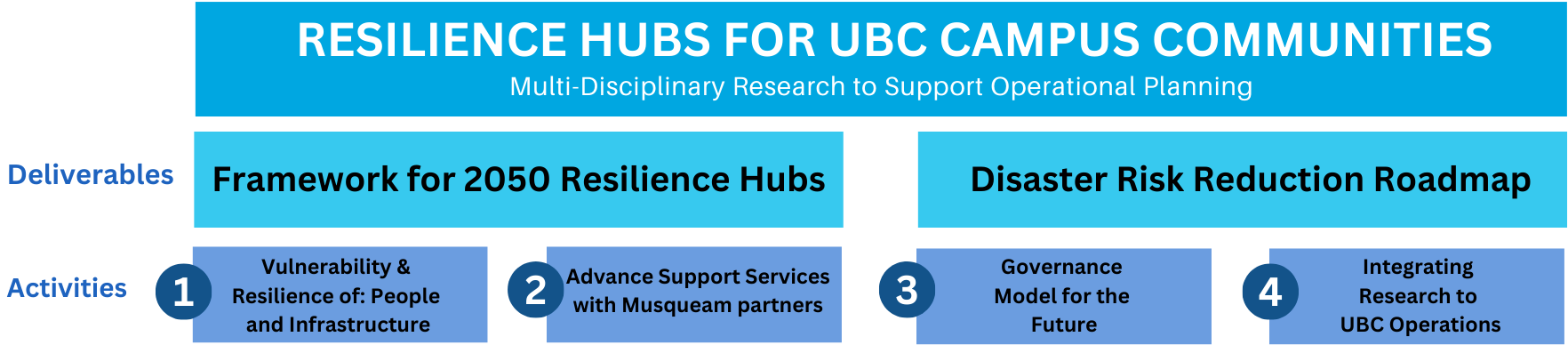
FRAMEWORK FOR 2050 RESILIENCE HUBS
A Resilience Hub is defined as a community amenity designed to build social connection, facilitate a sharing of knowledge and culture, and enhance wellbeing in non-emergency times, and in an emergency, provide shelter, critical service centralization, food and water. The value of connecting these purposes in one amenity is the known benefit of social and community connection for disaster resilience building. Findings from the project activities below will help inform a framework for Community Resilience Hubs.
*The physical infrastructure of a resilience hub is out of scope.
DISASTER RISK REDUCTION ROADMAP
Strong emergency management and resilience programming is required in order to support and sustain the Resilience Hubs framework. The research projects conducted for the first deliverable will inform the roadmap for enhanced long-term hazard and resilience planning. An additional research project will be conducted to envision governance models required to respond to future climate hazards. The development of the Disaster Risk Reduction roadmap will be a collaborative and consultative review of current operational practices for climate emergency response followed by a series of recommendations to inform long-term strategic direction and policy.
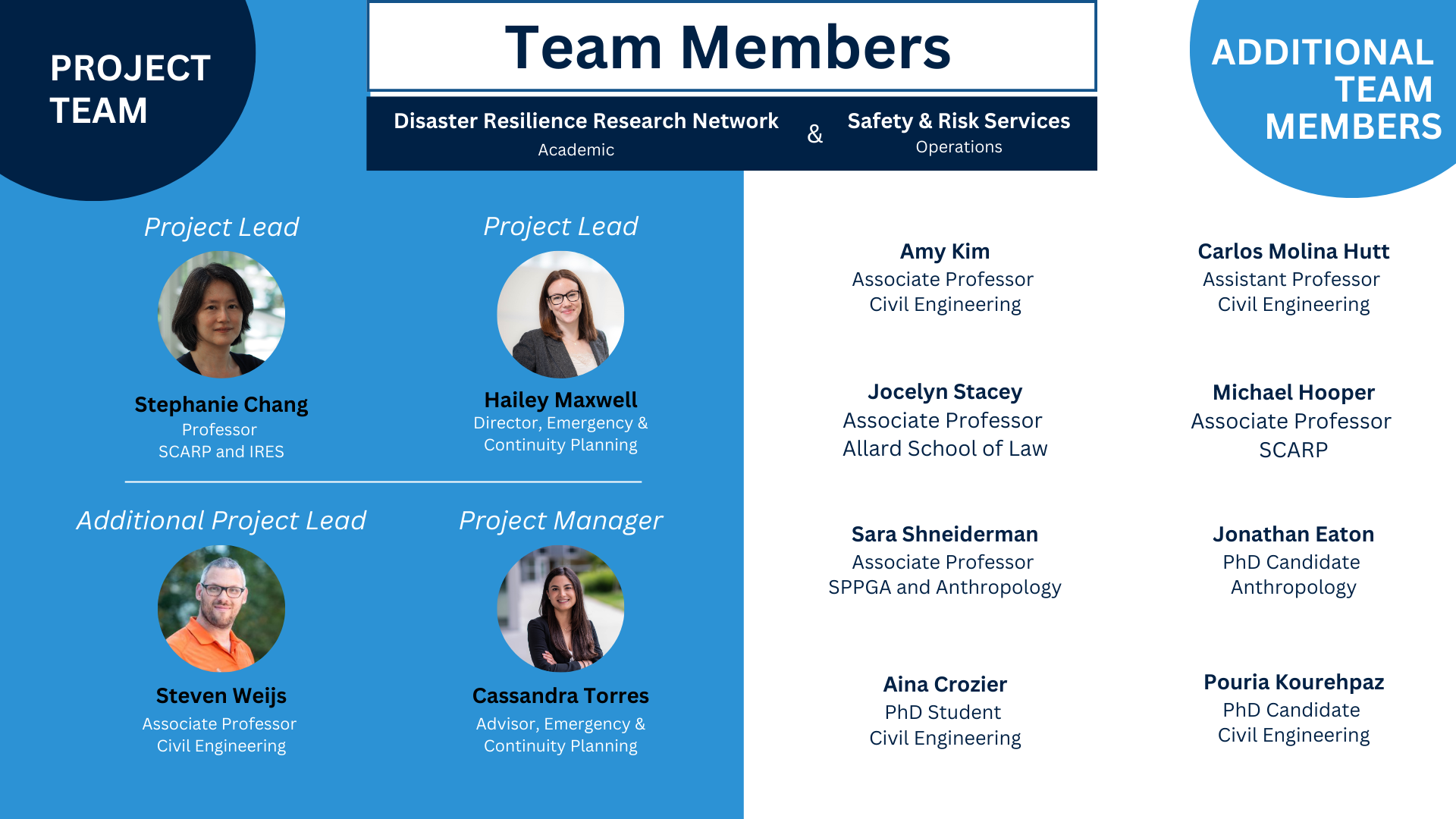
Project Members
For questions and further information, reach out to ready.ubc@ubc.ca.