
In this edition of DRRN Member Highlights, we are excited to feature Dr. Fuyubi Nakamura, Associate Professor in UBC’s Department of Asian Studies and Curator, Asia at the Museum of Anthropology. Dr. Nakamura is a socio-cultural anthropologist studying Asian visual and material cultures—especially Japan—with work on the memory of the Great East Japan Earthquake or 3.11, contemporary art and photography, museum practice, and Japanese diasporas in South America.
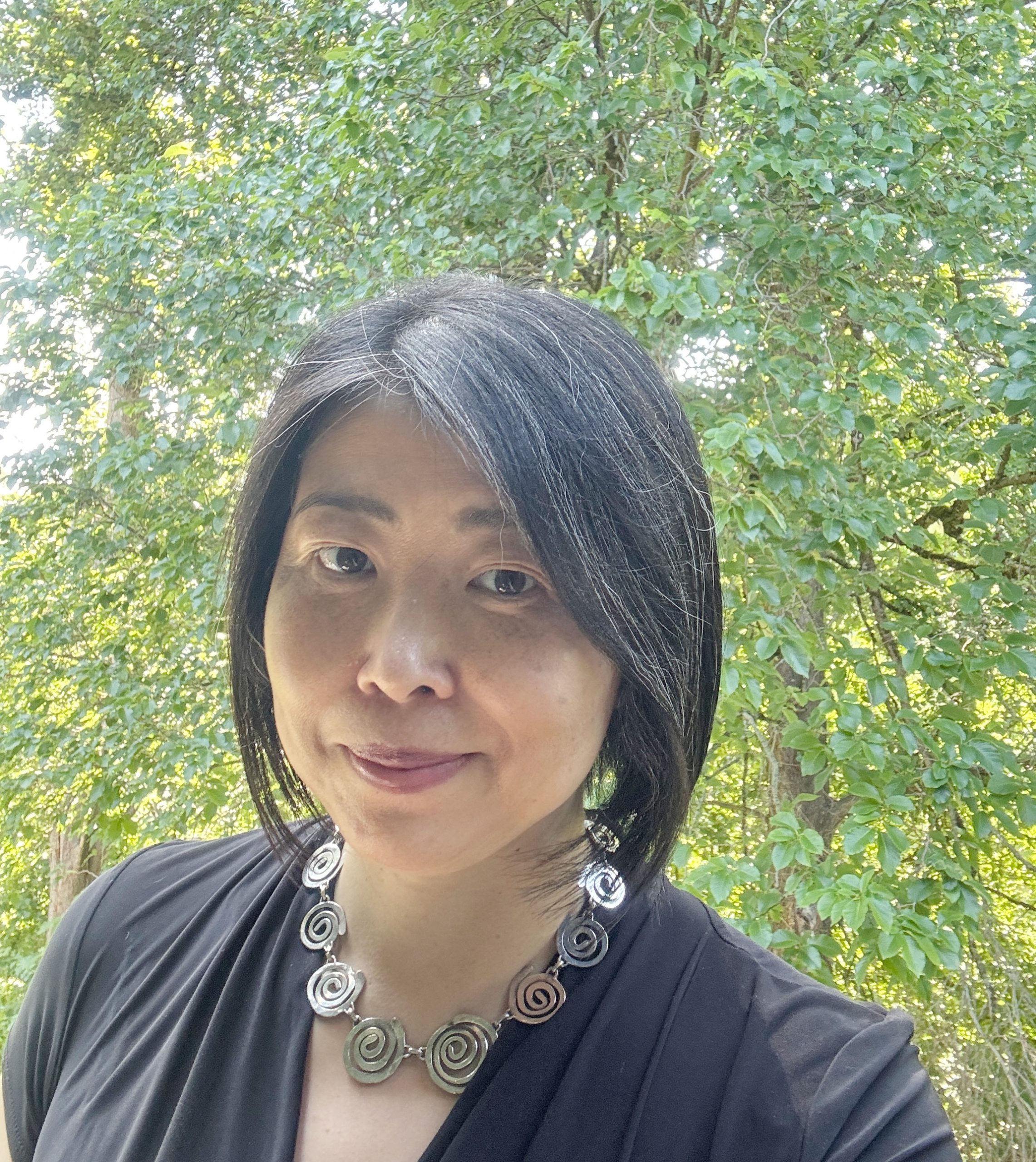
Fuyubi Nakamura
Associate Professor + Curator, Asia
Department of Asian Studies + Museum of Anthropology
Expertise: Disaster aftermath and recovery process, memory, community engagement, art, visual and material cultures, and Asian and Indigenous cultures.
Could you introduce yourself and tell us about your current research?
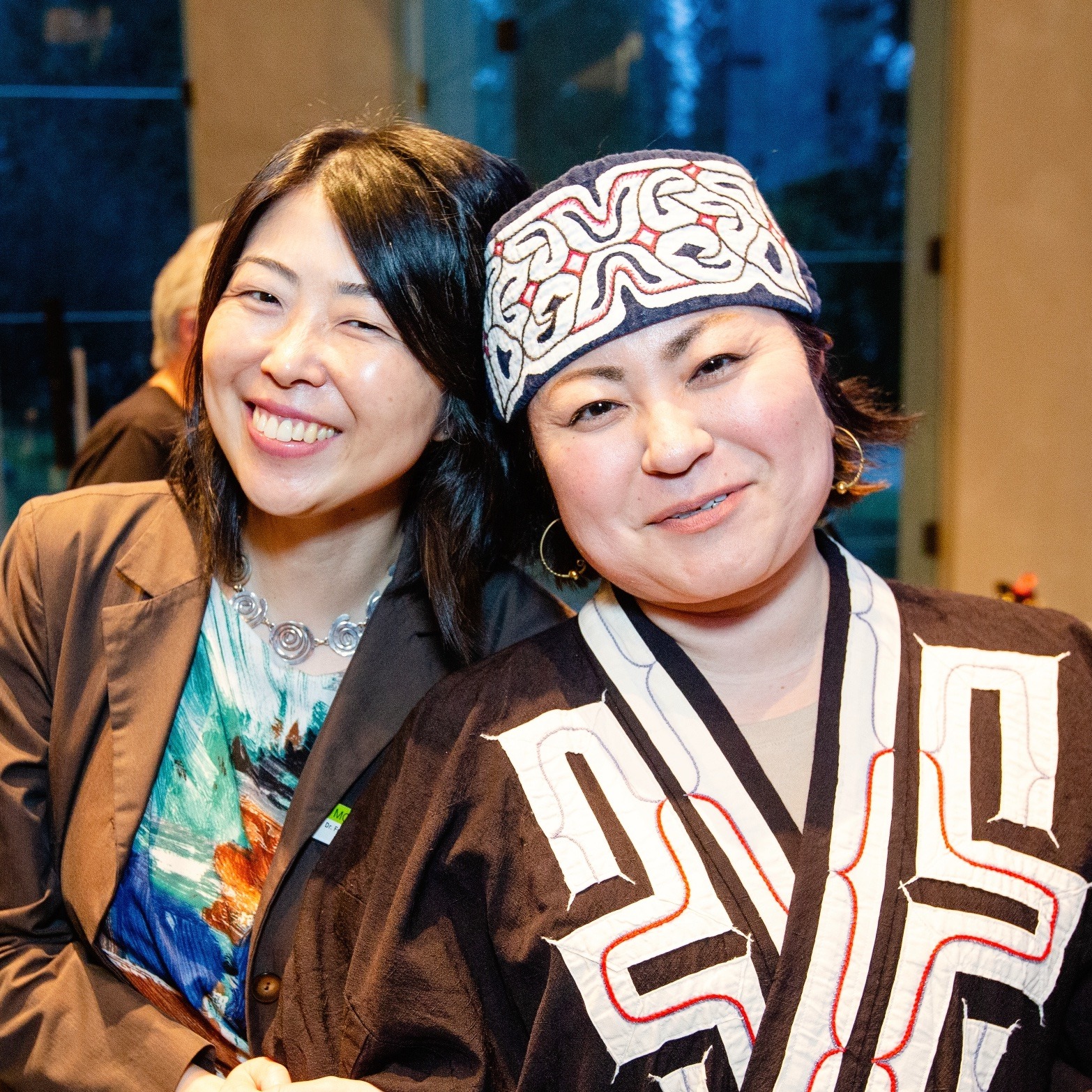
I am a socio-cultural anthropologist trained at the University of Oxford. A global nomad—originally from Tokyo— I have lived in seven different countries. I am an Associate Professor in the Department of Asian Studies and also work as Curator, Asia at the Museum of Anthropology (MOA) at UBC. Additionally, I am a faculty associate in the Department of Anthropology and a member of UBC’s Transformative Memory International Network. Prior to joining UBC in 2014, I taught at the Australian National University and the University of Tokyo, and curated exhibitions internationally.
Following the Great East Japan Earthquake or 3.11 in 2011, I was initially involved in relief and recovery activities as a volunteer, and continued to do research about the aftermath of 3.11. Collaboration and community engagement have been at the core of my research and curatorial work. In addition to my research on 3.11, I also conducted fieldwork in South American countries with large Japanese immigrant communities, such as Argentina and Brazil, and continuously work with Asian Indigenous and cultural communities, especially the Ainu.
My research through exhibition curation includes Traces of Words: Art and Calligraphy from Asia (2017) and A Future for Memory: Art and Life after the Great East Japan Earthquake (2021) at MOA. These exhibitions received the 2018 Canadian Museum Association Award of Outstanding Achievement and the 2022 Michael M. Ames Prize for Innovative Museum Anthropology, respectively, with the latter also receiving an honorable mention for the 2024 Sumie Jones Prize for Project Leadership in Japan Humanities respectively. My publications include Asia through Art and Anthropology (2013), Hokkaidō 150: Settler Colonialism and Indigeneity in Modern Japan and Beyond (2019) and most recently, “Relational Creativity in the Aftermath of 3.11: The “Lost Homes” Scale Model Restoration Project” in The Asia-Pacific Journal: Japan Focus (2025).
What motivated you to become a part of the DRRN community?
The DRRN project co-lead Sara Shneiderman is also a socio-cultural anthropologist, and we shared our mutual research interests on disaster recovery processes in Asian countries where our respective research takes place. She invited me to join the network when preparing the first research cluster application. An interdisciplinary perspective is crucial to consider the impact of disasters, and I was happy to join the network to learn from the other members from other disciplines.
What future developments in disaster resilience research are you most interested in or concerned about?
My ongoing research since 2011 is about the long-term recovery process of the Great East Japan Earthquake. We often think about immediate responses in the aftermath of disasters or consider how we can prepare for disasters, but I am interested in long-term emotional and psychological recovery, not necessarily focussing on the physical reconstruction or recovery of cities or towns impacted by disasters. We need to give a bit more attention to this side of disaster resilience or recovery as these things are often invisible.
I have continued to return to the disaster affected locations in Tohoku, the north-eastern part of Japan every year since 2011 except 2020 because of the pandemic. I meet survivors including museum and cultural institution professionals as well as scholars and artists who are involved with the long-term recovery process in diverse ways. My research has resulted in several publications, conference presentations and invited talks as well as an award-winning exhibition as listed above, A Future for Memory.
I would be interested in expanding the network to include other countries, which have several institutions focussing on disaster resilience or recovery, and also have more experiences of dealing with disasters themselves. As I already have an established relationship with some members of the International Research Institute of Disaster Science (IRIDeS) at Tohoku University in Sendai City, Miyagi Prefecture, Japan, it would be great for us to consider organizing some events or collaborating on some research projects with them as we have a lot to learn from them. They also have established links with institutions in other countries and locations such as Indonesia, Hawaii and the UK, so joining their network will enable us to connect with more scholars internationally.
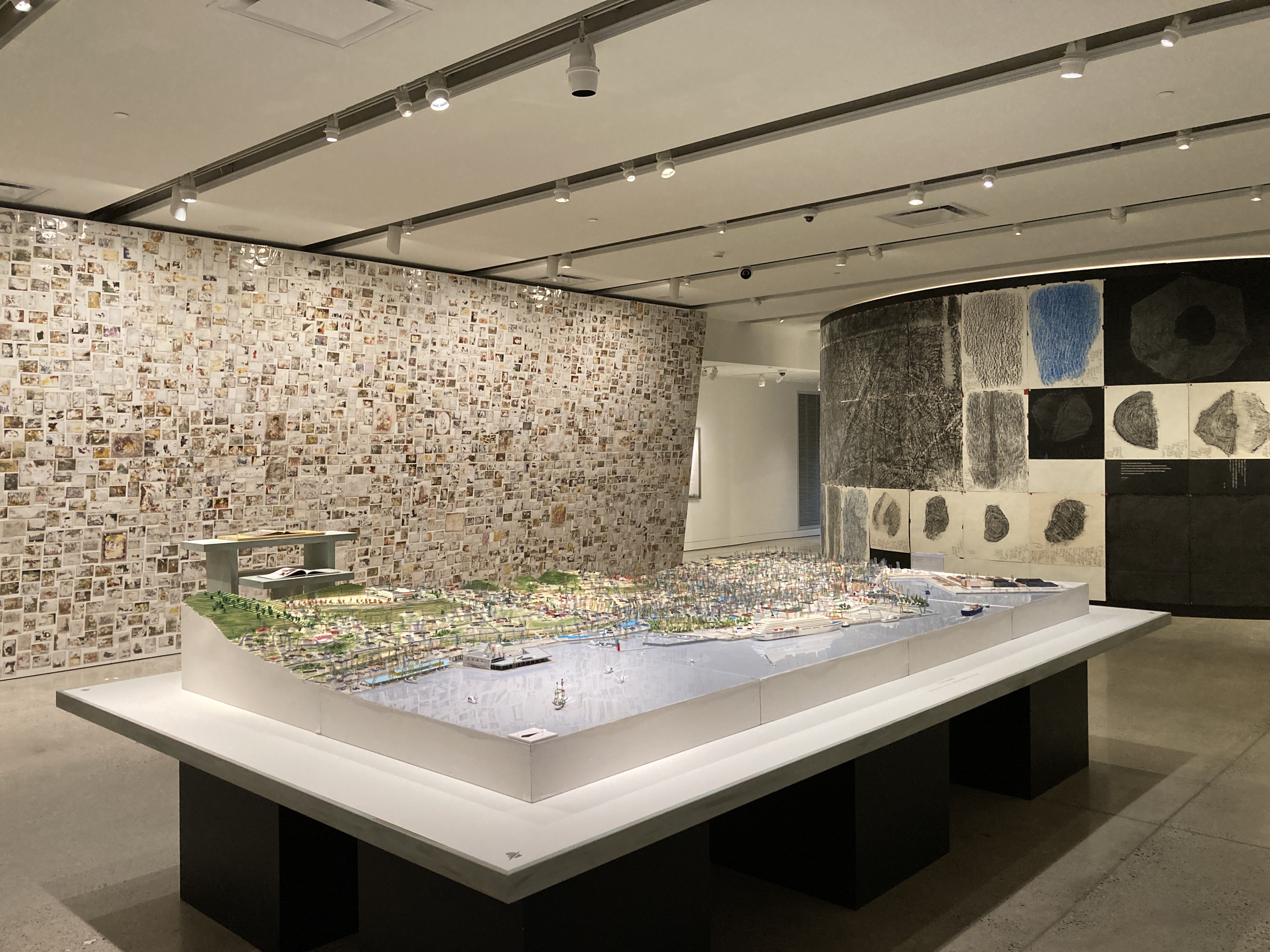
A Future for Memory at MOA, 2021. Photo by Fuyubi Nakamura.