
In this edition of DRRN Highlights, we’re pleased to feature Dr. Bala Nikku, Associate Professor in the School of Social Work and Human Service at Thompson Rivers University. Bala’s work sits at the heart of community resilience, exploring how people, places, and social systems respond to, and rebuild after disasters.
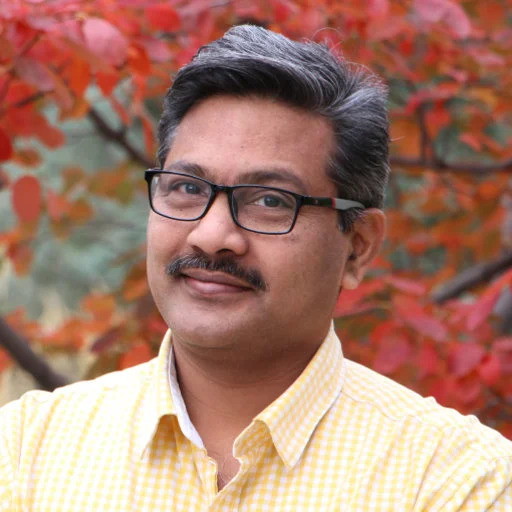
Bala Nikku
Associate Professor
School of Social Work and Human Service
Thompson Rivers University
1. Could you introduce yourself and tell us about your current research?
My name is Bala Nikku, and I am currently serving as an associate professor of social work with Faculty of Education and Social Work, Thompson Rivers University.
Trained in interdisciplinary sciences, I am interested in co-finding answers to wicked policy and complex issues like building communities’ resilience to disasters. Hence, my research focuses on understanding the intersection of disasters, resilience, policies, institutions, and community futures. I explore how communities are adapting to and recover from disasters and build their resilience to face future disasters. We argue that disasters are not ‘natural’ but are made through failures of policies and governance. My research emphasizes the role of local, traditional and indigenous knowledge systems along with formal science in building social networks and sustainable practices. The two eyed approaches to community centered research and using community science and co-produced solutions are critical for resilient futures. My collaborative research further examines the vulnerabilities that communities face in disaster-prone areas and aims to develop co-produced strategies that enhance communities’ resilience in the long term. Finally, my research also delves into the role of governance, policy, and community-based approaches in building resilience, ensuring that communities not only survive disasters as victims but are survivors, champions, and thrive in the face of future challenges.
2. What motivated you to become a part of the DRRN community?
As I shared above, my research interest lies in the intersection of disasters, resilience, and community futures. I am curious and often driven to explore how communities, especially those who are marginalized, portrayed as victims and vulnerable (from the Global South and also from Western countries like Canada), can anticipate, endure and transform in the face of hazards, and build sustainable futures rather than simply recover and survive.
I am highly motivated to join the DRRN community because its mission aligns closely with my own and offers me learning and networking opportunities to further develop my research collaborations and impacts. As I witnessed from participating in the recent network meeting at UBC, the DRRN Network brought together a diverse, transdisciplinary group of researchers from early-career to senior and established researchers who are committed to inclusive and equitable disaster resilience research. I also like the emphasis of the network members connecting research to real world policy and decision-making for individuals, communities, organizations, and governments.
Within DRRN I see a unique opportunity to:
- Collaborate across disciplines and geographies with scholars and practitioners who share a commitment to community centered resilience and to addressing systemic inequalities in disaster risk.
- Leverage DRRN’s platform to translate my research into actionable strategies and policy relevant insights, helping to inform disaster risk reduction, adaptation and transformation in community contexts.
- Contribute to and grow the network’s inclusive focus, by bringing my perspective on how community knowledge, governance, and futures thinking can strengthen resilience in emerging and under-represented contexts.

3. What do you wish practitioners or policymakers would ask you about your research? What insights would you like to share with them?
I wish practitioners and policymakers would ask me, how can communities themselves shape resilience strategies rather than simply be the targets of disaster-related policies and programs? And how can we meaningfully engage communities in shaping their own pathways to resilience and recovery?
The insights I would like to share are:
- Resilience is not only about infrastructure or rapid recovery. Please have a look at the Resilience Stories we produced.
- TRI’s work with which I collaborated. You can read more about this here.
I am increasingly learning about strengthening community and social systems, trust, and local capacities that enable communities to adapt, learn and unlearn, and thrive in uncertainty. Policies are most effective when they are co-created with communities, informed by local, traditional and indigenous knowledges, and attentive to power, equity, and inclusion. My research shows that when communities are recognized as partners, collaborators in the true sense rather than passive recipients, then for sure disaster recovery and reintegration leads to long-term transformation, not just short-term repairs. I urge disaster and community practitioners and policymakers to see resilience as a process of empowerment and future building, not just risk management and bouncing back or forward steps.
4. How do you see yourself leveraging DRRN’s interdisciplinary approach in your work? What is your vision for the network?
DRRN is hosted and housed in UBC, my vision for DRRN is to evolve into a nationally and globally recognized collaborative hub that not only produces interdisciplinary knowledge but also translates it into actionable solutions, which the network is already making inroads.
I further envision DRRN as a connector between academia, governments, and communities facilitating community centered policies, innovations in disaster policy making (policy design labs for example) nurturing early career researchers and community scholars amplifying local voices in global resilience discourses.
5. Can you share a specific project or initiative within DRRN that excites you the most? Why is it important?
I immensely value and benefit from the DRRN’s interdisciplinary approach as an invaluable platform to bridge academic, policy, and community-based perspectives on disaster risk reduction and resilience. Many of the past and current projects of DRRN of very valuable to my work. For example, the BC Atlas of Disasters and DRRN research seminars are very useful for my work. I look forward to using the mapping, visualization and data tools around disaster risk and adaptation provided in the Atlas and sharing this with community members to use it for their own work.
6. What future developments in disaster resilience research are you most interested in or concerned about?
I like to see disaster research and humanizing disasters as critical pillars and build collaborations with other academic researchers (DRRN members), communities, practitioners, and policymakers for us to vision resilience as a social, cultural, and political process. We need to learn and invest in nurturing community capacities and enable us to move from a 'risk society' to envision and co-create our own sustainable futures.